HNW Prospecting for Independent RIAs in Charlotte

Bhavya Barot

Charlotte is the second largest banking centre in the United States — a distinction that shapes its HNW wealth market in ways that are both obvious and counterintuitive. The obvious part: a city anchored by Bank of America's global headquarters and Wells Fargo's East Coast hub produces an enormous population of financial services executives, bankers, and professionals with complex compensation and meaningful accumulated wealth. The counterintuitive part: a city full of sophisticated finance professionals is exactly the kind of market where the independent, fee-only RIA has the clearest possible value proposition.
Charlotte's HNW population is financially literate in a way that most markets are not. These are people who understand fee structures, who know what a basis point is, who have worked in institutions where they witnessed conflicts of interest firsthand. When they encounter an independent, fee-only RIA, they often understand immediately what it means and why it matters. The sales process is shorter, the relationship is deeper, and the referral quality is exceptional — because a Charlotte banking executive who refers a colleague to an advisor they trust is referring to someone whose professional judgment they respect.
For multi-billion dollar independent RIAs, that concentration is both an extraordinary opportunity and a brutal competitive reality. Charlotte is a market with extraordinary depth in a specific client profile — the financially sophisticated finance professional — and a growing base of corporate, technology, and entrepreneurial wealth that adds breadth to that core.
The Charlotte HNW Wealth Landscape
Charlotte's HNW wealth is anchored by several distinct and consistently growing sources.
Financial Services Executive Wealth
Bank of America's global headquarters occupies a substantial footprint in Uptown Charlotte, employing tens of thousands of professionals at its corporate campus. The executive population at BofA — from vice presidents through the C-suite — accumulates meaningful wealth through base salary, annual bonuses, restricted stock awards, long-term incentive plans, and in many cases deferred compensation arrangements that involve complex distribution elections with significant tax implications.
Wells Fargo's East Coast operations hub adds a second major concentration of financial services executive wealth to the Charlotte market. Truist Financial, formed through the merger of SunTrust and BB&T and headquartered in Charlotte, adds a third. Ally Financial, LendingTree, Brighthouse Financial, and dozens of other financial services companies with significant Charlotte operations extend this concentration further.
These executives have a specific and recurring planning challenge that most of their advisors — including, ironically, many of the advisors at the same institutions where they work — do not address well. Financial services employees at major banks are typically prohibited from investing in certain securities and face specific compliance restrictions on their investment activity. They have complex deferred compensation arrangements — 401(k) plans, supplemental executive retirement plans, deferred cash and equity plans — that require coordinated decisions across tax, investment, and estate dimensions. Their employer equity positions are often subject to trading windows and blackout periods that interact with optimal tax planning in non-obvious ways.
Independent RIAs with specific expertise in financial services executive compensation — who understand the Charlotte banking world from the inside, who can navigate the specific restrictions and compliance requirements these executives face — have a genuine and differentiating advantage in this market.
Corporate Headquarters Growth
Charlotte has diversified its corporate base significantly over the past decade. Honeywell relocated its global headquarters to Charlotte in 2019. Atrium Health — one of the largest nonprofit health systems in the Southeast — is headquartered in Charlotte. Duke Energy, the nation's largest electric utility, is headquartered in Charlotte and employs thousands of professionals in the metro area. Lowe's and Nucor Steel add to the Fortune 500 concentration.
Each of these companies produces its own stream of executive compensation complexity. Duke Energy executives with regulated utility equity positions face a distinctive planning profile — the combination of regulated return expectations, long-tenured employment culture, and substantial defined benefit pension assets alongside equity compensation creates a planning situation that rewards specific knowledge. Atrium Health's senior leadership, as executives of a large nonprofit, face their own distinctive planning circumstances around 403(b) plans, 457(b) deferred compensation, and the complexities of executive employment in a nonprofit context.
Technology and Fintech
Charlotte's technology sector has grown substantially alongside and adjacent to its financial services base. A thriving fintech ecosystem — payment processing, lending technology, insurance technology, and wealth management technology — has emerged in the city, building on its financial services infrastructure. Companies including AvidXchange (which went public in 2021), Brighthouse Financial, Synchrony (which has significant Charlotte operations), and dozens of growth-stage fintech companies have created founders, executives, and early employees with meaningful equity wealth.
The Charlotte tech community has a distinctive profile: its founders and executives are often financially sophisticated (shaped by proximity to the banking world), focused on B2B and fintech applications rather than consumer technology, and practical in their approach to wealth management decisions. They respond well to advisors who demonstrate genuine planning expertise rather than investment management performance claims.
Regional Business and Entrepreneurial Wealth
The Carolinas have a deep and diverse tradition of family business ownership across manufacturing, textiles, construction, healthcare, and distribution. The Charlotte metro — which spans both North and South Carolina — serves as the financial hub for a regional economy that generates a consistent flow of business sale transactions, private equity recapitalizations, and generational wealth transfers. Business owners in the $5M to $50M enterprise value range who are approaching exit or succession represent a significant and recurring source of post-liquidity wealth management opportunity.
These entrepreneurs often have a specific planning need that most advisors underestimate: they have spent their entire careers accumulating illiquid equity in a private business, and the transaction is the first time they have had to think about managing liquid wealth at meaningful scale. The advisors who help them think clearly about their post-liquidity situation — how to invest the proceeds, how to manage the tax impact, how to build a financial plan that extends beyond the business — earn relationships that last for the rest of their lives.
The Competitive Landscape for Independent RIAs in Charlotte
Charlotte's advisory market has an unusual characteristic: it is a major financial centre dominated at the institutional level by the same banks whose employees are among the most valuable HNW prospects. Bank of America, Wells Fargo, and Truist each have private wealth management divisions that serve (or attempt to serve) their own employees — creating a built-in conflict that many financially sophisticated clients recognise and eventually move away from.
The independent advisory market in Charlotte has grown significantly over the past decade but remains underdeveloped relative to the size of the opportunity. The major national RIA aggregators have established presences, but the independent boutique market in the $100M to $400M range is not crowded. There is room for well-positioned firms to establish significant market presence.
The key differentiator in Charlotte is not size or brand — it is specific expertise in the wealth profiles that dominate the market. The RIA that can speak credibly to financial services executive compensation, to the specific restrictions and planning challenges of a BofA or Wells Fargo executive, has a differentiated value proposition that no generalist competitor can match.
The Prospecting Challenge Specific to Charlotte
Charlotte is a relationship market with a specific professional culture — direct, practical, and sceptical of financial sales pitches. The finance professionals who dominate the market's upper income tiers have heard every advisory pitch. They have sat through introductory meetings with every major wirehouse. They have seen the conflict of interest in their own institutions. They are not looking for another presentation — they are looking for an advisor who demonstrates genuine knowledge of their specific situation before asking for a meeting.
In this market, outreach quality matters enormously. A generic prospecting message to a BofA managing director will be ignored. A message that demonstrates specific knowledge of restricted stock award vesting schedules and blackout period management — and asks a specific question about how they are currently handling their concentration — has a real chance of producing a response.
Spaces designs outreach for this market reality, building messages that demonstrate planning expertise relevant to the specific wealth profile of each target prospect.
How Spaces Works for Charlotte-Area RIAs
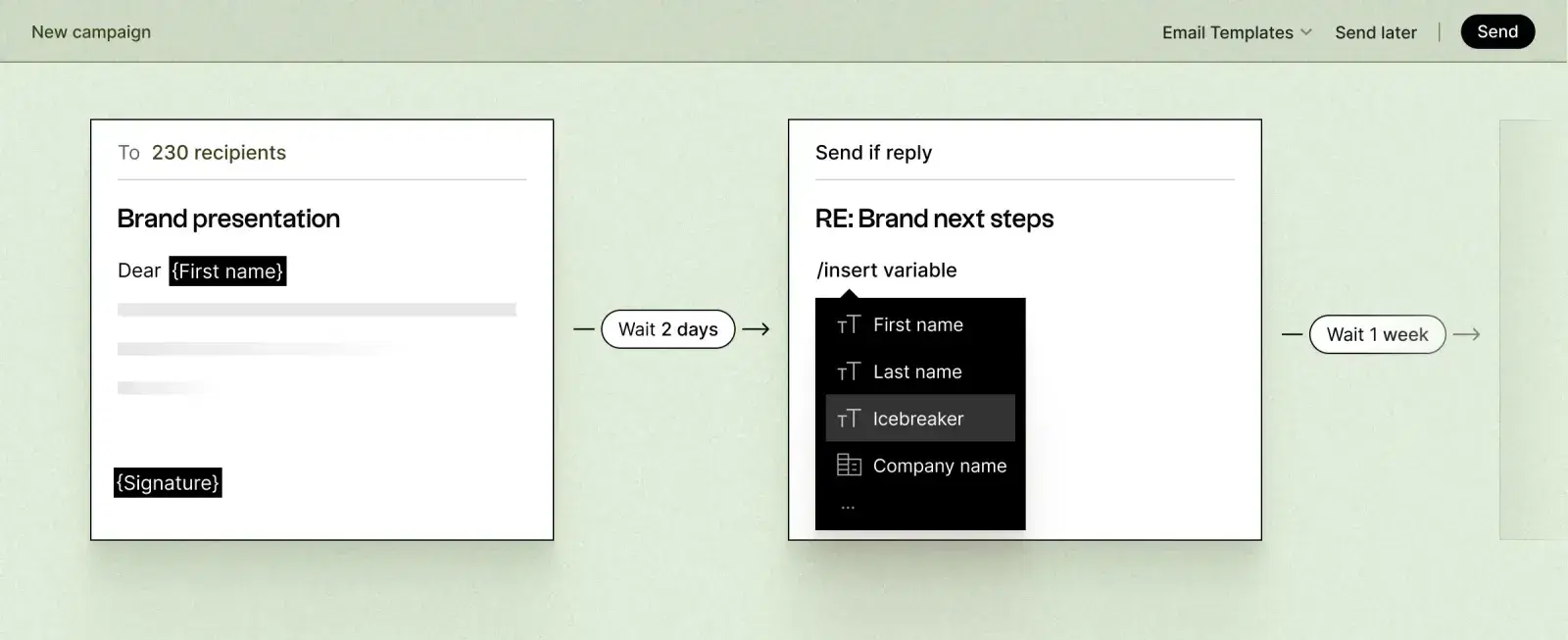
Spaces is a fully managed HNW meeting booking service for independent RIAs. Spaces identifies high-net-worth prospects who match your firm's target profile in the Charlotte metro area, runs personalised outbound outreach, manages all responses, and books confirmed meetings directly into your calendar.
Every prospect who reaches your calendar has confirmed $500,000 or more in investable assets and expressed genuine openness to a wealth management conversation.
Frequently Asked Questions
Does Spaces work specifically in the Charlotte market?
Yes. Spaces serves Charlotte, Ballantyne, SouthPark, Lake Norman, Huntersville, Matthews, Gastonia, and surrounding communities in both North and South Carolina.
What types of HNW prospects can Spaces target in Charlotte?
Common target profiles include financial services executives at BofA, Wells Fargo, and Truist; corporate executives at major Charlotte headquarters; fintech founders and executives; regional business owners approaching exit; and healthcare executives.
How long before the first meeting is booked?
Spaces typically launches within two to three weeks and delivers first qualified meetings within 30 to 45 days.
Is there a setup fee?
Reach out to discuss pricing and availability in the Charlotte market.